Does a Small Hotel Need a Website? Yes & Here’s Why
If you’re the owner of a small boutique hotel, an independent B&B, a luxury villa or a short-term rental, you may have wondered from time to time: Does a small hotel need a website?
In the modern digital era, hospitality and tourism are among the most competitive industries, so it makes sense to wonder how you can stand out and whether you really need your own website if you own a small, independent or boutique hotel.
Most, if not all, hotels, B&Bs and holiday rentals are listed on large global OTAs (Online Travel Agencies), such as Booking.com, Expedia or Airbnb.
On top of that, there’s this misconception that only multinational chain hotels and grand resorts need their own websites.
Even when the question “Does a small hotel need a website?” comes up, smaller property owners often dismiss it, doubting the need for their own website.
For most owners of boutique hotels, luxury villas, traditional guesthouses, holiday apartments and short-term rentals, listing their properties on the most popular OTAs is more than enough to guarantee a fully booked high season.
Undoubtedly, big OTAs are valuable tools if you want to put your property in front of a global audience.
But what happens when your property gets lost in a sea of hundreds of similar listings, all of which are your immediate competitors?
Not to mention that your property’s financial viability is at risk when commissions imposed by OTAs range between 15% and 25% of each booking value.
So, ask yourselves again: Does a small hotel need a website?
In this detailed guide, we’ll delve into the 7 most important reasons why any accommodation should invest in a custom-made official website and why this is necessary for even the smallest property.
Does a Small Hotel Need a Website? 7 Reasons That Prove It Does
1. No More High Commissions
Money talks and it’s the strongest argument for why any independent hotel should have its own website, since commissions imposed by OTAs (Booking.com, Airbnb, etc.) range from 15% to 25%.
For your holiday rental, small guesthouse or villa, these commissions chop off a massive slice of revenue, significantly reducing your net budget and negatively impacting the profitability of your business.
However, your own website lets you implement a modern, secure booking engine, giving guests the option to book directly on your official site.
This means that 100% of the value of each stay ends up in your hands, with zero third-party commissions.
Then again, you might be thinking, a website comes at some added annual costs. That’s indeed true.
Yet, with just one or two direct bookings through your website per month, the commission savings can cover your site’s maintenance, upgrades, and hosting for a full year.
Therefore, the website practically pays for itself right from the start.
2. Bespoke Storytelling
For a traveller who browses through Booking.com or Airbnb, your hotel is just another listing among hundreds of others.
Bound by standardised colours, fixed boxes, strict filters and rigid constraints, it’s virtually impossible for your property to stand out, highlight its unique identity and tell its own story.
Your own website, though, is a different story. There, you have complete control. By making the most of compelling storytelling, your guests can experience your hospitality before they even arrive at your property.
You can bring emotion to how you greet your guests, explain the philosophy behind your homemade breakfast and share the story of your building and local community.
Moreover, the way photos are displayed on a website is crucial. OTAs display photos as chaotic photo galleries.
However, on your website, you can strategically place high-quality, professional hotel photos right next to relevant text.
This way, guests are drawn to your hotel’s storytelling because they’re eager to experience your hospitality, increasing the likelihood they’ll complete their online booking.
Ready to start?
3. Digital Authority & Credibility
According to global studies, over 50% of users who visit platforms like Booking.com, Expedia, etc, temporarily abandon these websites the moment they find a property that catches their eye.
They open a new tab on Google to search for the official website of that specific accommodation. One of the main reasons they do this is to get a sense of security.
They want to confirm that the property truly exists, that it is a serious, legitimate business rather than some kind of online scam. A professional website instantly builds trust and credibility.
This is even more critical if you’re managing one or more short-term rentals or a villa, which lack the physical front desk presence of a major hotel.
In such cases, merely having an official website is a clear sign of professionalism.
Even more so when potential clients encounter a sophisticated, aesthetically superior homepage design. That is when they feel even more secure.
A premium website gives them the confidence to book, knowing they are dealing directly with the owner rather than an impersonal platform.
4. Full & Customised Information
One of the biggest disadvantages of third-party booking platforms is that the number and type of information you can list there are very restricted.
The listing fields are predetermined, leaving you no room to expand on useful information, including detailed arrival instructions or local guides about the destination.
In contrast, guests find immediate, full and structured information on your website.
All their questions can be answered easily and quickly without the need to send countless messages to a Customer Service that might not even reply – it’s happened to all of us.
Your own website is the only place that gives you absolute freedom to create:
This way, you upgrade the user experience before your guests even set foot on your property.
5. Freedom From Third-Party Platforms
As mentioned earlier, every booking platform operates under its own strict rules, pricing policy and, above all, hidden ranking algorithm.
If your small business relies solely on these channels, your digital home doesn’t belong to you.
This means that you are at the mercy of the hosting platform, which can easily tweak its algorithm to hide your property from search results, increase its commission fees to further reduce your profit or even go out of business.
Similarly, your social media presence (e.g., on Instagram, TikTok or Facebook), albeit important and an integral part of any marketing strategy, isn’t enough on its own.
That’s because social media platforms set their own rules. While they might favour your posts today, their algorithms could change tomorrow, completely wiping your content from your followers’ feeds.
Conversely, your website is 100% yours, serving as the permanent digital home of your business, without intermediaries or constraints, giving you absolute control.
You set the rules and pricing policy without depending on OTA algorithms, while benefiting from a continuous online presence free from ever-changing social media trends.
6. Customer Loyalty
When someone books a stay at your property via Booking.com or Airbnb, the platforms don’t grant you access to the real contact information and personal emails of your guests.
They usually provide you with an encrypted email that looks something like @booking.com.
As far as third-party platforms are concerned, it’s their customer, not yours. Once your clients check out, you lose touch with them and miss out on a valuable opportunity to turn them into repeat guests.
With an official website, though, you can collect your guests’ emails in a legal, transparent, and secure way, fully compliant with the European GDPR.
This helps you build a mailing list of travellers who have already experienced your hospitality and made beautiful memories at your property.
During the winter months or before the start of the new season, you can apply digital marketing strategies by sending these people a targeted email sequence.
By offering them a special discount or early-booking offer, you encourage them to book again with you, this time directly through your website, bypassing third-party commissions entirely.
7. Targeted Advertising Potential
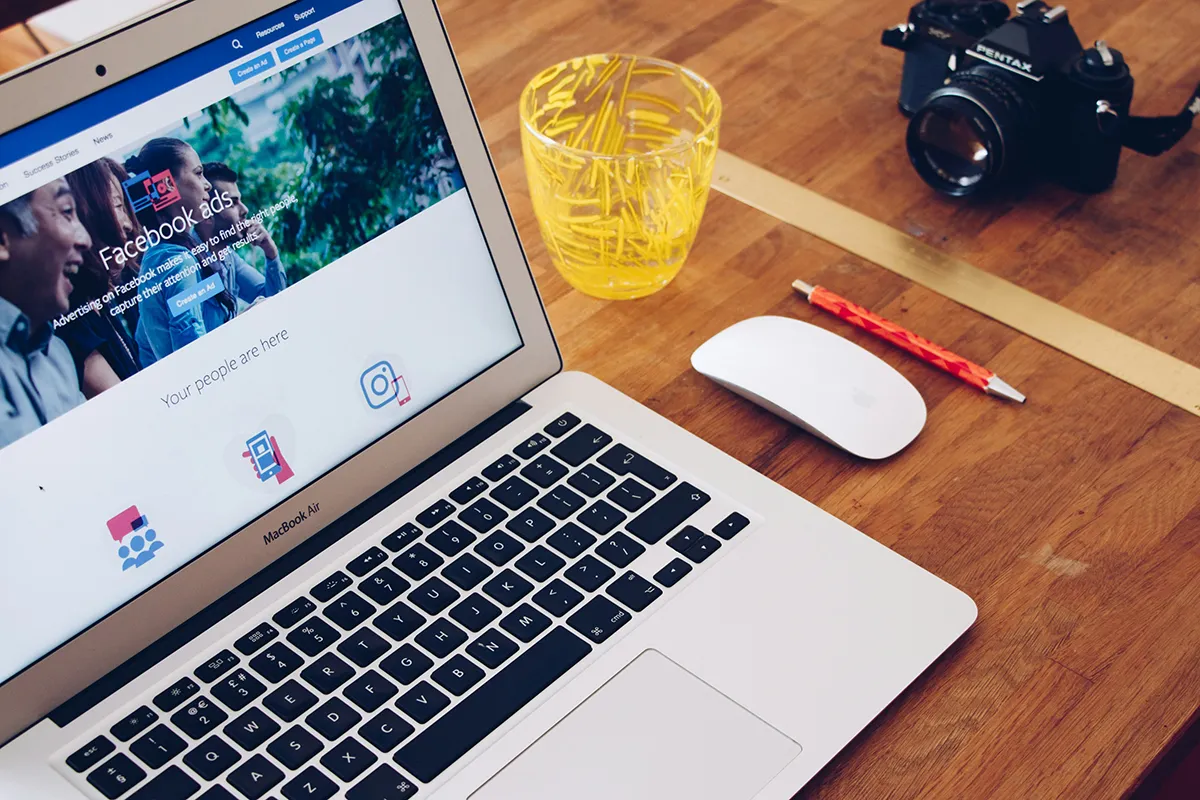
One of the most common ways to grow and promote an accommodation business is through paid online advertising on social media (Facebook Ads, Instagram Ads, TikTok).
That said, if you don’t have your own website, you end up creating an advertising campaign that directs users straight to your listing page on Booking.com.
This way, you’ll be wasting your own ad budget to drive users to an OTA, a platform engineered to show them dozens of listings from your direct competitors the second they scroll down.
Even if the user does pick your property, you still wind up paying a high platform commission on a booking you generated at your own expense.
Furthermore, without your own website, you miss out on leveraging Google Search Ads, one of the most powerful digital marketing tools, available exclusively to official website owners.
On your own website, you can create dedicated landing pages to target your ideal audience with absolute geographic and demographic precision through an advertising campaign.
For instance, you can target digital nomads, families, couples or tourists from specific European countries and lead them straight to your booking page, thus maximising your return on investment (ROI).
A Strategic Investment With Immediate ROI
Let’s revert to our initial question: Does a small hotel need a website? To sum up our answer, we would like to emphasise the following.
Building a website for hotels and lodging properties of any size is far from a needless cost; it’s a powerful strategic investment that guarantees a fast payback period.
Having an official, modern website isn’t a luxury. It’s the ultimate tool for securing autonomous growth, gaining digital independence and skyrocketing your business profits.
Even if you’re a small business owner managing a villa, a boutique hotel, or a holiday rental, acquiring digital independence is very important.
This is the only way to future-proof your business against constant technological changes, maximise your earnings and establish a powerful, well-known brand in the hospitality sector.
So, does a small hotel need a website? By now, it should be clear that, yes, even an independent property should have its own official website.
Therefore, do not leave the future of your small business at the mercy of external algorithms.
One Comment